

The History of 16 Lavitt’s Quay
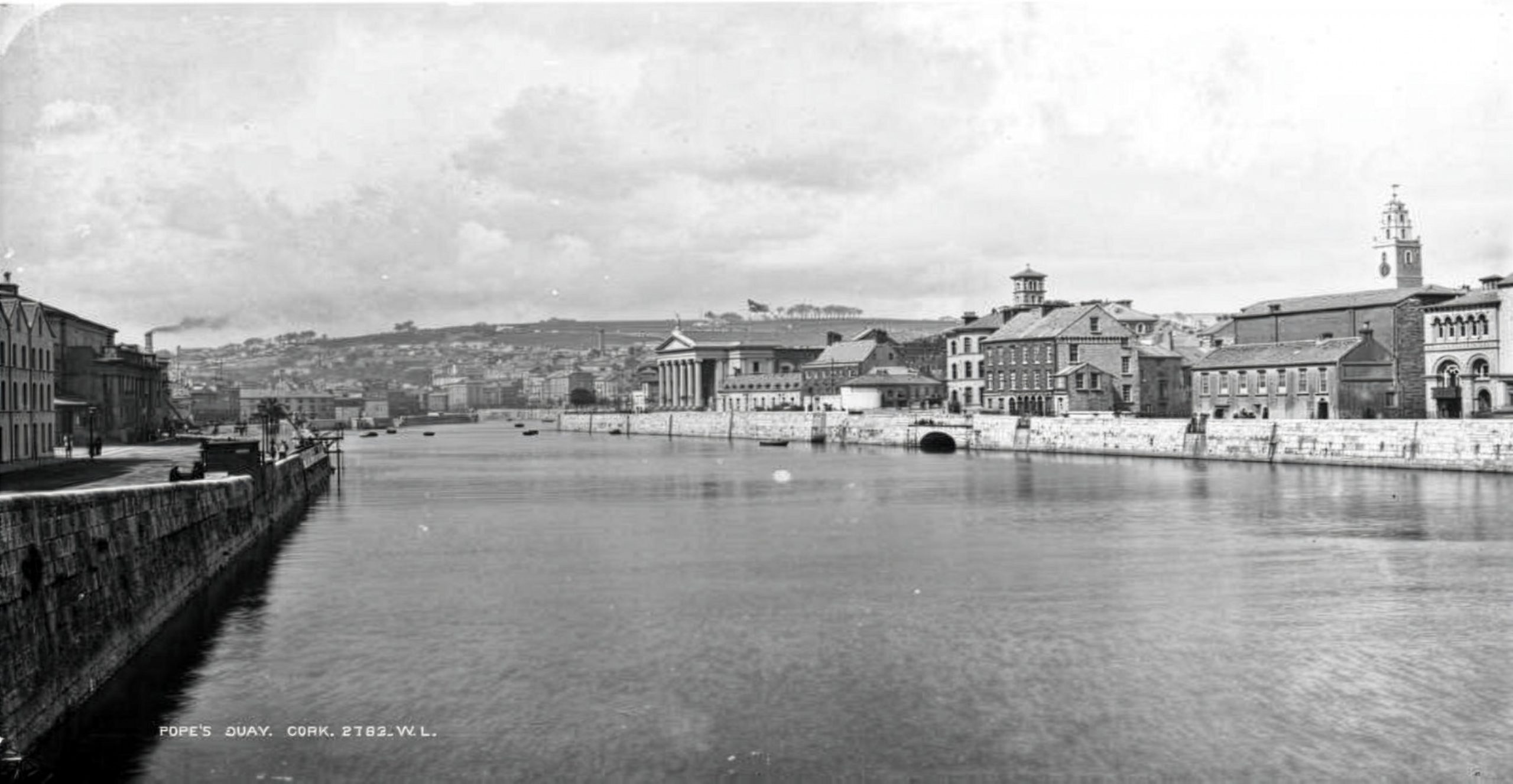
Lavitt’s Quay lies on reclaimed marshland, outside the former walled city of Cork. This area of the marsh was reclaimed and developed in the early eighteenth century, and the majority of its new population were Huguenots (French Protestants). Alderman Joseph Lavitt (La Vitte, a Huguenot name) was Mayor of Cork in 1720, and developed a short stretch of the new riverbank, which was then named after him. Rocque’s map of 1759 shows a large stretch of the south quay west of the then Custom House (now the Crawford Gallery) named as the Cole (Coal) quay.
The exact date of construction of the existing building at no. 16 has not been established, but given that the quay had been developed during the latter half of the eighteenth century, it is likely, based on the surviving fabric, to have been built towards the end of the 1700’s. The proportions of the façade, with its piano nobile at first floor, and the oval staircase to the rear, also support this date.
The owners and occupiers of the building, despite its sophisticated interior, appear from the later nineteenth century at least to have been in the business of loans and Pawnbrokers. From the 1880’s to the 1940’s, the building appears, on the evidence of street directories, to have been consistently occupied by Abraham Wolfe, a pawnbroker. More recently, one of the last occupiers of the building was a private art gallery, the Lavitt Gallery.